
Respect, Fear, and Play
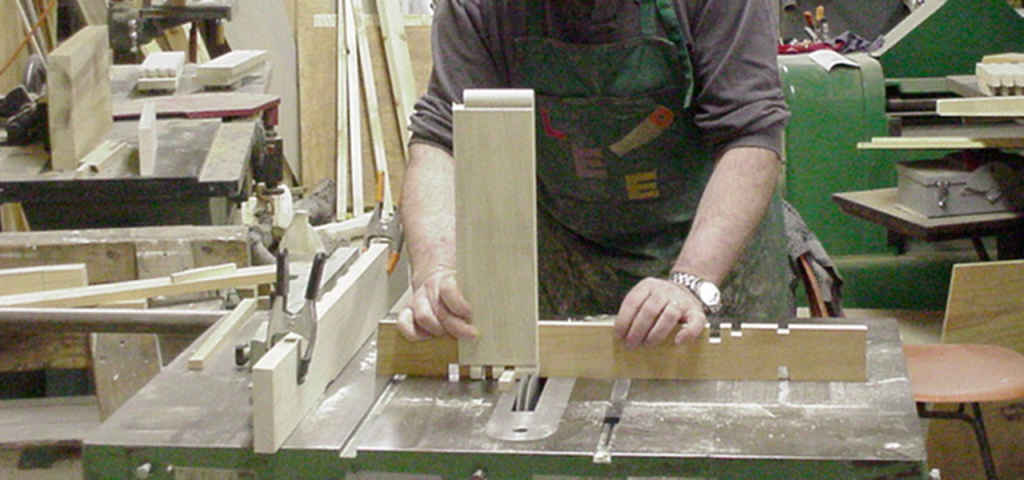
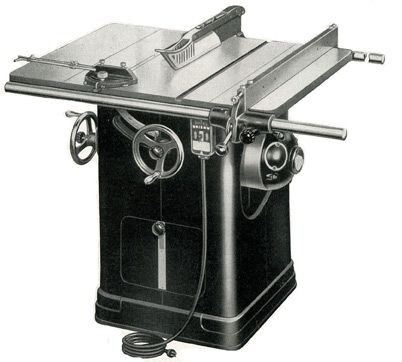
The table saw is the heart of most workshops. It rips, crosscuts, grooves, and shapes wood with a speed and precision no hand tool can match. But anyone who’s used one knows it carries a voice — equal parts power and warning.
Over the years, I’ve seen the table saw teach lessons that go beyond joinery. Some lessons came through close calls, others through humor or confidence. All of them left a mark.
Lesson One: Respect Comes First
Years after I left the classroom, I visited the woodworking shop of one of my former students. Outside, matched lumber was neatly stacked — entire trees milled into thick planks, arranged so their shape and grain still spoke through the pile. Huge bags of sawdust waited for landscapers to collect them.
Inside the 10,000-square-foot steel building, the energy was pure rhythm: saws humming, sanders buzzing, sunlight cutting through the dust. Fifteen artisans worked across benches and machines, each absorbed in their craft.
Fred greeted me with a hug and a heavy look.
“Yesterday was a rough day,” he said. “Remember how you told us never to reach for a scrap on the back side of the blade?”
I nodded.
“Well, I drilled that into my crew. But one of my guys ignored it — reached across for an offcut and lost a finger.”
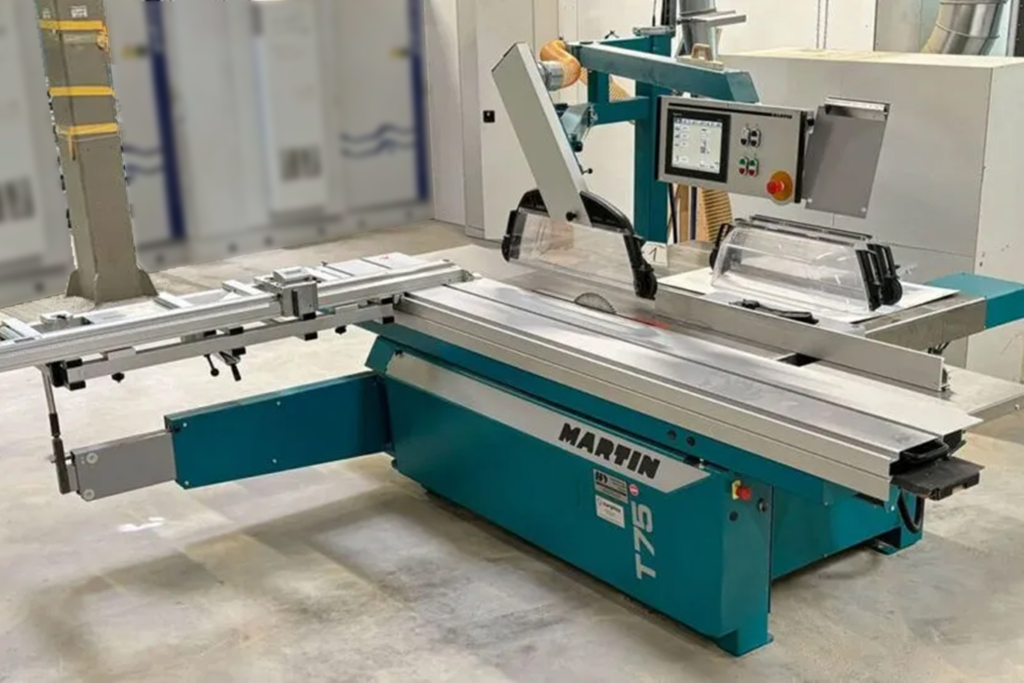
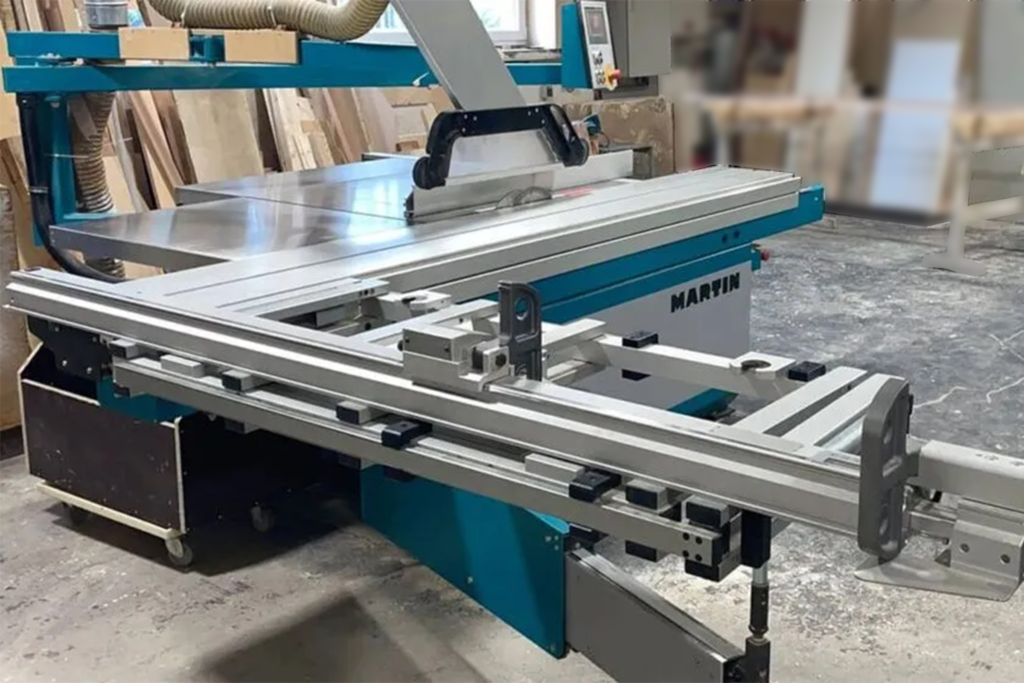
The sound in the room seemed to drop out. I looked over at the big Martin table saw, a sixteen-inch blade gleaming in the light. That’s when I felt it again — the truth every woodworker knows:
The saw doesn’t care about your intentions. It only knows speed, force, and physics.
It demands attention and respect — or it will remind you why you should have given it.
Most injuries aren’t accidents — they’re moments when attention slips..
Lesson Two: Accidents Happen in a Blink
In more than forty years of teaching, I’ve witnessed two significant table saw hand injuries. Neither resulted in lost fingers — but both happened to the operator’s least dominant hand. Each was over in less than a millisecond — too fast for the human eye to follow.
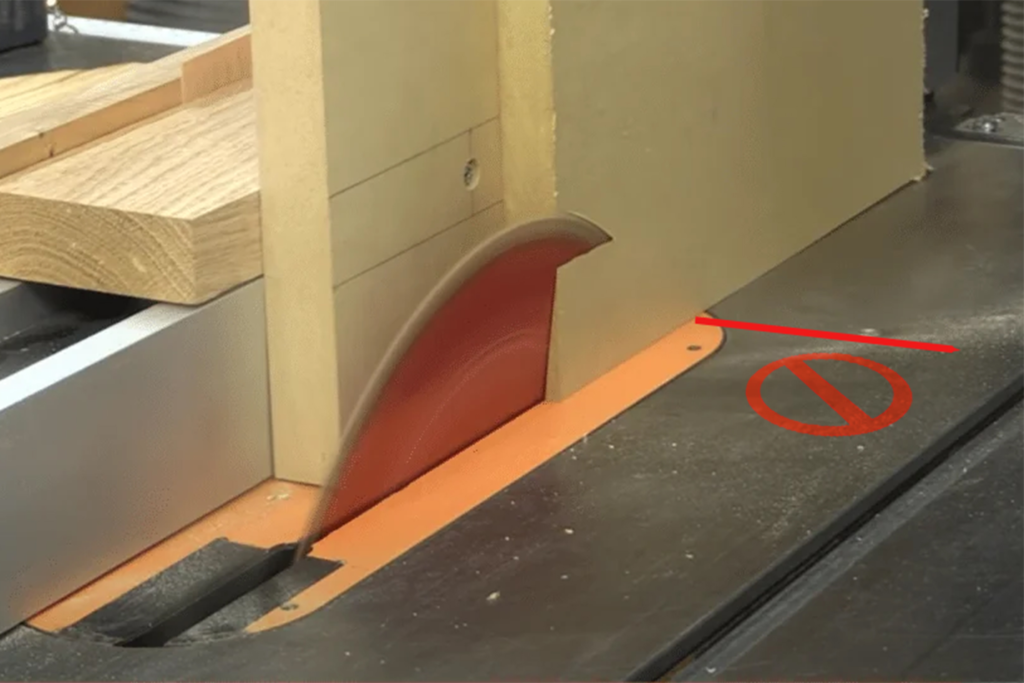
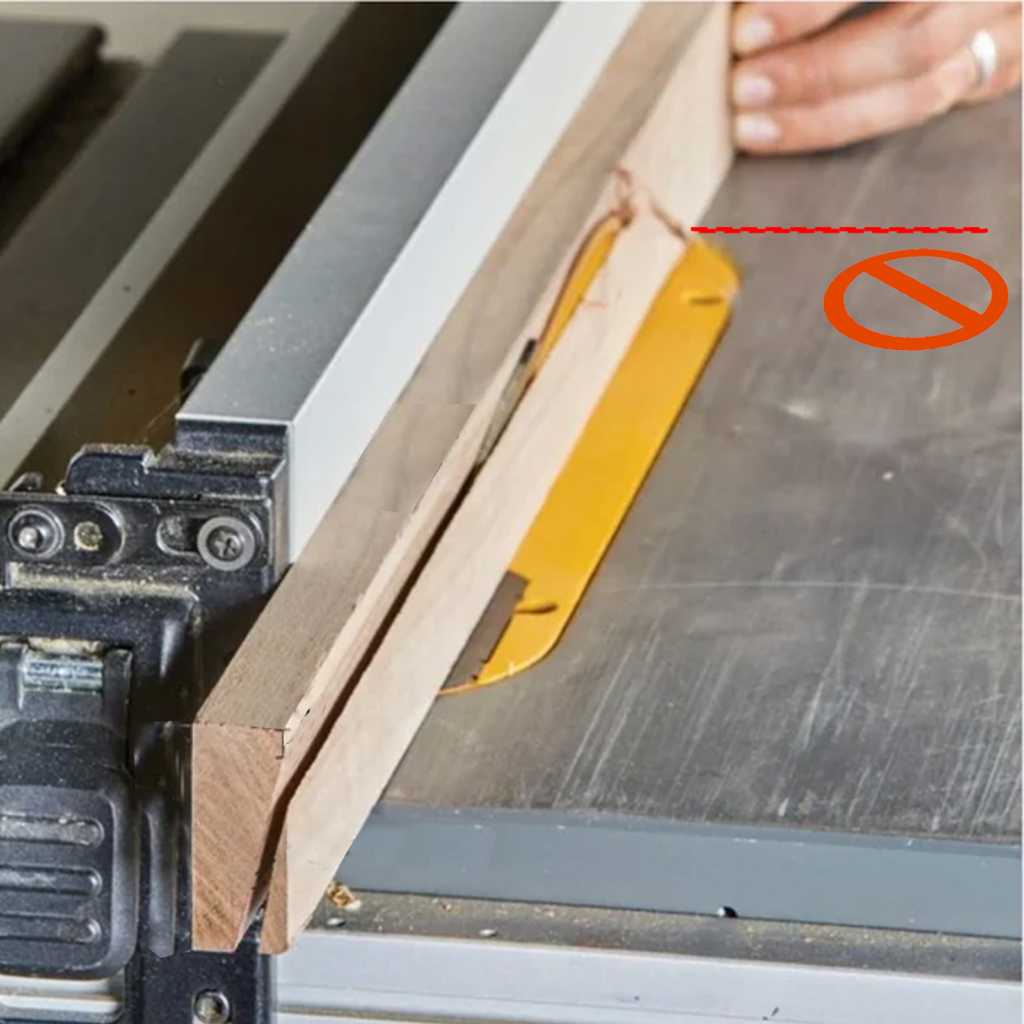
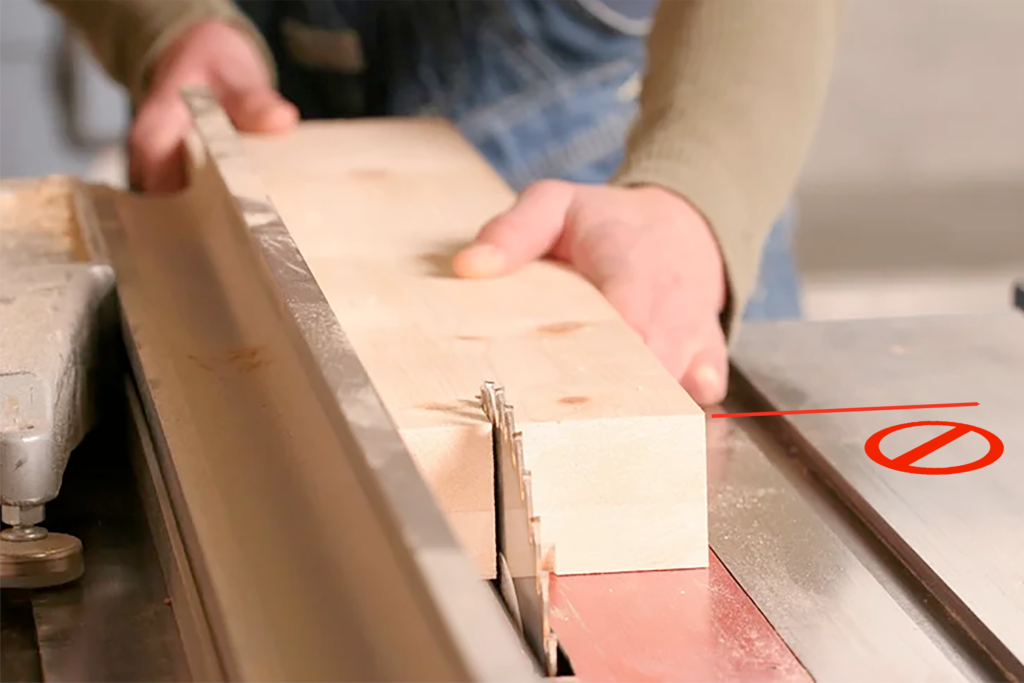
On the saw, your dominant hand — in both these cases, the right — pushes the board steadily through the cut, guiding the wood between the blade and the fence, right of the blade. The left hand’s job is simple: apply gentle diagonal pressure, down toward the table and right toward the fence — but never move beyond the leading edge of the blade.
It’s a simple rule:
Your left hand never, ever passes the leading edge of the blade.
Both injuries broke that rule in exactly the same way, while resawing a board. In that instant, when the scrap piece on the left side of the blade detaches from the “keeper,” danger begins. If the operator’s left hand is near the arbor area, pressing the loose scrap toward the fence but actually into the face of the spinning blade, the wood is suddenly propelled back, sometimes kicking back violently — leaving nothing to resist the hand’s momentum but the spinning teeth of the blade. It all happens in a fraction of a second — faster than you can process. The result? More than a manicure.
It’s a terrible irony: the pressure of that left hand, meant to steady the wood, does nothing to help once it crosses beyond the leading edge of the blade into what I call the impact zone. The table saw — the tool that teaches precision and discipline — will punish even a moment’s distraction faster than the mind can register what’s happened.
Every operator / maker remembers their first near miss — that sudden heartbeat of realization when the saw reminds you it’s not your partner but a power that merely tolerates you as long as you respect it. Sometimes the wood itself reveals its own flaw — a hidden knot, a twist, a shift in grain — and reminds you the material has its own life and will. The table saw doesn’t care about experience or confidence. It only cares about discipline. The cut is fast, final, and fair.And in that moment, you understand why respect — not fear — is the foundation of craft.
Lesson Three: Hearing the Saws Voice
Every woodworker has a sound — a rhythm unique to their relationship with the tool.
Fred once told me, “I can always tell when you’re on the saw — I can hear it from across the shop.”
He meant that balance between control and flow — a steady pitch that comes from confidence, not haste. Using a table saw isn’t just mechanics. It’s a full sensory experience: sound, vibration, resistance. You learn to listen to the cut. Modern technology, like the SawStop safety system, has transformed the landscape of woodworking. When it senses human skin, it stops the blade in milliseconds, saving countless fingers and hands. Yet, no technology replaces awareness. Every instructor knows that subtle anxiety — watching a beginner feed their first board across the blade, hoping the lessons of respect hold.
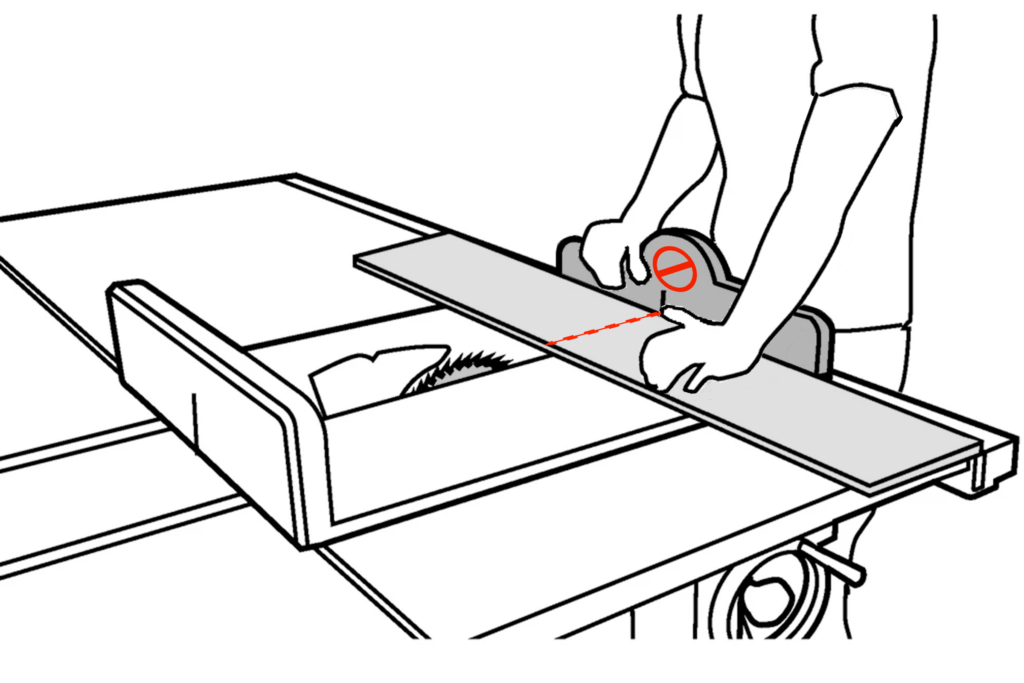
Lesson Four: The Flying Block – Dan Valenza’s Quick Reaction
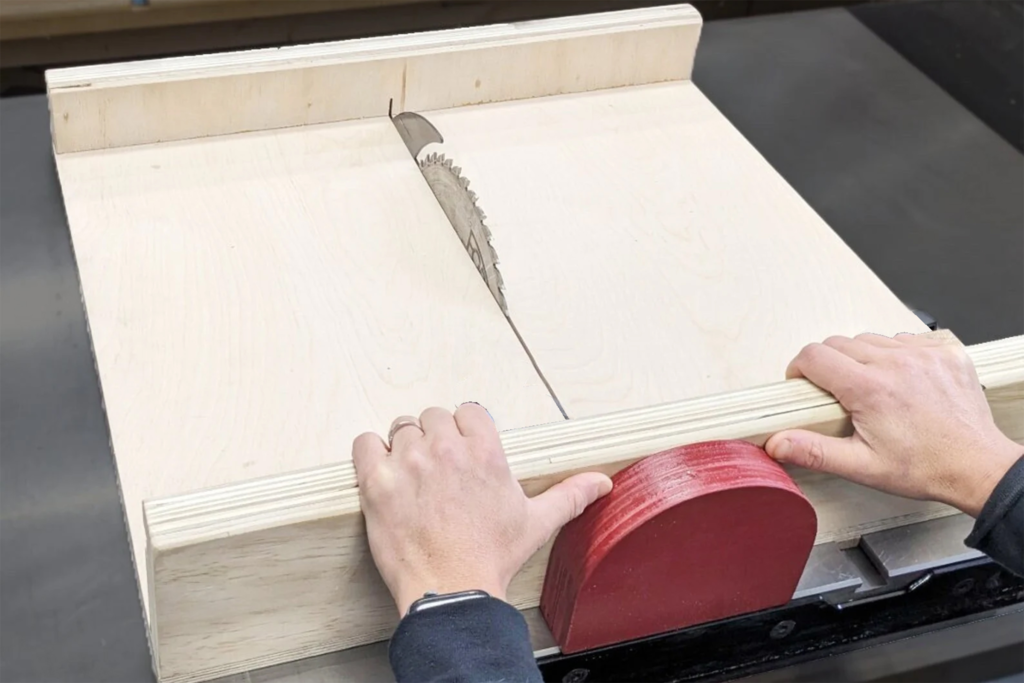
In the 1970s, my mentor at UNH, Dan Valenza, taught safety his own way. One student was about to cut with both thumbs lined up in the blade’s path while doing a crosscut within a cutting sled. Dan couldn’t shout over the saw, so he hurled a block of wood across the shop to capture his attention and stop him, as he was to make a dangerous move. It worked. The student, Rick White, AKA Booka – the “Kitchen Magician” always tells this story with gratitude since after a lifelong career as a cabinetmaker, he knows what was at stake.
Soon after the incident, Dan installed a “Big Power” switch that could kill every machine in the shop instantly. Thoughtful, and effective.
Today, technology has gone further. SawStop systems sense flesh and stop the blade in milliseconds, often saving fingers. It’s a leap forward. But even with new tech, the old rules still apply: the saw still demands respect.
Lesson Five: From Fear to Confidence
At the Dalhousie School of Architecture, where I served as Artist-in-Residence, I often oversaw the woodshop during evening hours — the real working hours for graduate students pushing toward their thesis deadlines.
A grad student, Justin, came from a theatre background and was weaving performance ideas into his architectural models. His concepts were imaginative, but his hands betrayed hesitation. I could feel his fear of the table saw from across the room — the stiffness in his shoulders, the way he paused before every cut.
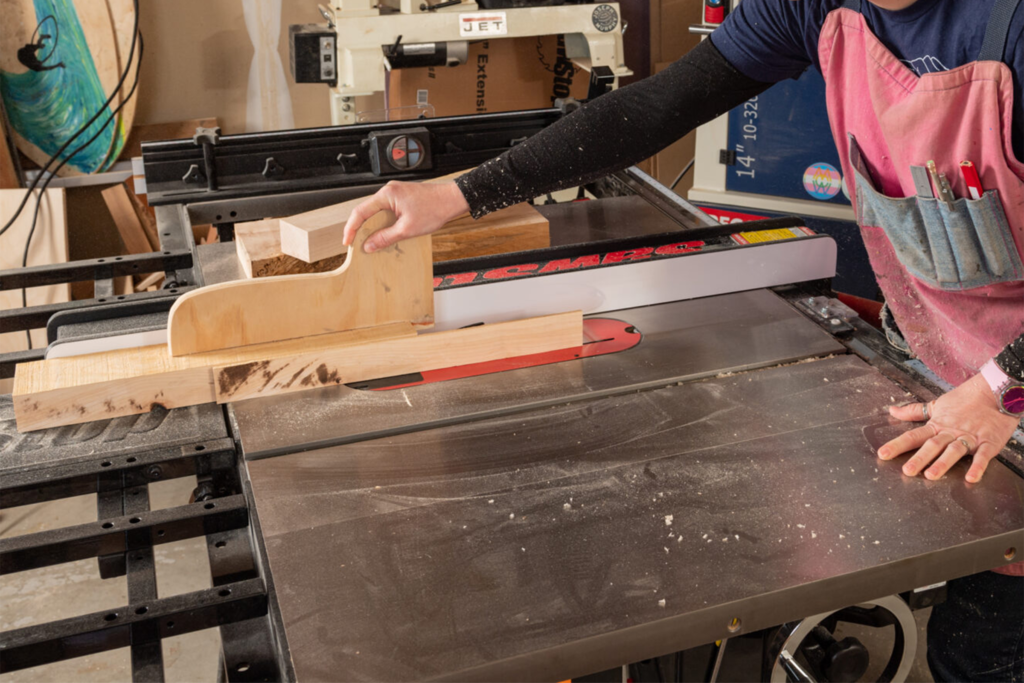
We didn’t have a SawStop — just a 5-horsepower, ten-inch Powermatic saw that demanded care, attention and respect. Justin asked to make a few cuts. His tension was obvious. So we set aside a dedicated evening. For ninety minutes, we stripped everything back to fundamentals — stance, breath, body alignment, and the rhythm of feed and resistance. Rip cuts, crosscuts, sheets of plywood, fine resawing — we worked through them one by one.
By the end of the session, he had all the pieces he needed for his thesis model. More importantly, his posture had changed. His movements were fluid, confident — the hesitations gone. The saw hadn’t changed, but his relationship to it had.
Weeks later, after his thesis presentation, Justin sought me out.
“Thank you,” he said. “Working on the saw feels different now. Once you showed me how to prepare — and why — I felt like I could trust myself and the machine.”
Justin transformed his anxiety to mastery, from fear to flow. That’s what craftsmanship really is — learning by doing until fear turns into fluency. It’s tacit knowledge: the kind you feel in your hands before you can explain it.
Lesson Six: RISD -The Table Saw as Theatre
Saws have long had a place in magic shows, but rarely does the table saw get the spotlight.
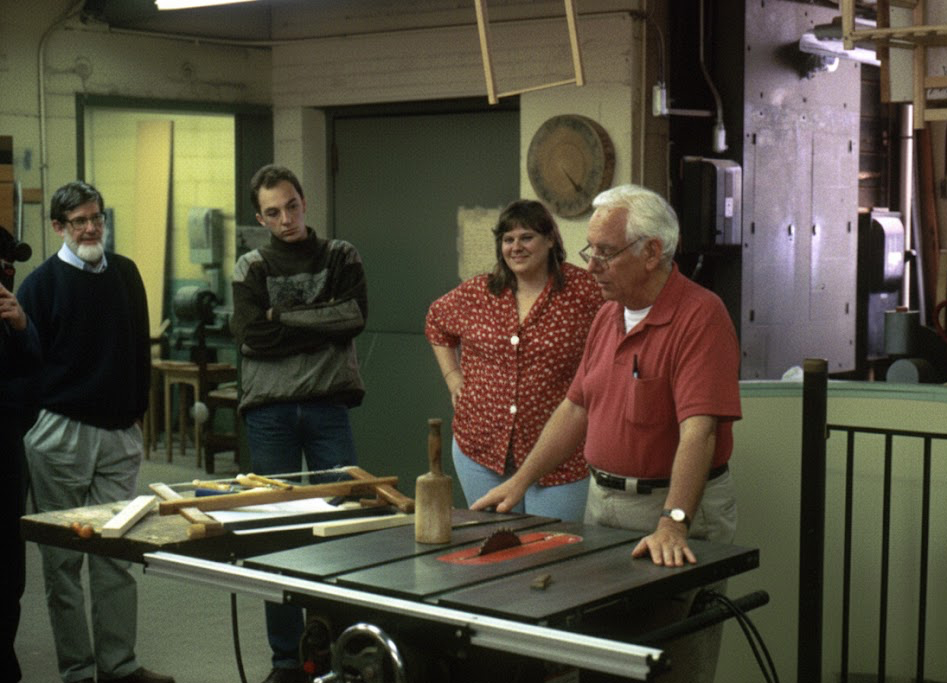
At RISD, watching Tage Frid demonstrate production-style joinery was as much theatre as it was instruction — part danger, part precision, part magic.
In my first year at RISD, Frid had just published Tage Frid Teaches Woodworking: Book I, Joinery, the first of his three-volume series. He was confident — sometimes to the point of defiance. If we asked about a particular joint, he’d grin and say, “Read the book, man. Read the book.”
But we always showed up for his demonstrations.
One morning, he gathered us around the old Delta table saw to show machine-cut joinery for carcass construction — rabbets, dadoes, tongue-and-groove, finger joints, half-laps, and finally, the dramatic splined miter. Unlike hand-cut dovetails, these were crisp, efficient cuts, straight off the saw.
For the opening act, Frid cut two boards at 45 degrees, forming a miter. The beauty of this joint lies in the continuous grain wrapping the corner, no end grain exposed. But it’s weak — end grain doesn’t glue well. The fix is a spline: a thin strip set into a groove cut across the miter to strengthen it.
And here’s where Frid the showman took over.
He squared the blade, dropped it, and with two quick cuts, made a spline from scrap. The final move — the “trapped cut” — is one every woodworker dreads: the thin wafer can kick back violently when freed. Sure enough, it shot from the blade — and without missing a beat, Frid caught it midair, like a magician pulling a card from a deck. He slid the spline into the groove, completing the perfect splined miter.
We were twelve students, gathered in the bright shop, morning light streaming through the west windows. Frid rarely took attendance, but he always knew who was missing. That day, Billy Crozier was late. When he finally wandered in — sheepish, avoiding eye contact — Frid wasted no time.
“Good afternoon, Crozier,” he said dryly, beckoning him over to eyeball a setup on the saw. As Billy bent down eyeing the edge of the blade against the joint layout line, Frid spotted three scratches across his cheek. The woodworking paused; the theatre resumed, in his best Danish accent.
“So, Crozier, vhat happened to you? Vitch one of your ladies?”
“No, Mr. Frid, it wasn’t like that.”
“Oh really? So vhat happened? Is she OK?”
“It was my cat, Mr. Frid. She got startled and scratched me. Lucky she didn’t get my eye.”
Frid studied the marks, deadpan. “Vy, those are big scratches. She must’ve been a very big cat. Vus she a black cat or a vite cat, Billy?”
“She was white, Mr. Frid.”
Frid grinned. “Ah, you know, Crozier — blondes have more fun.” And just like that, the room erupted in laughter. The lesson stuck.
Frid knew how to fuse danger, humor, and precision into something unforgettable — every demonstration a mix of mastery and mischief, as if the saw itself were in on the joke.
Lesson Seven: Wendell Castle Workshop – Attitude and Pragmatism
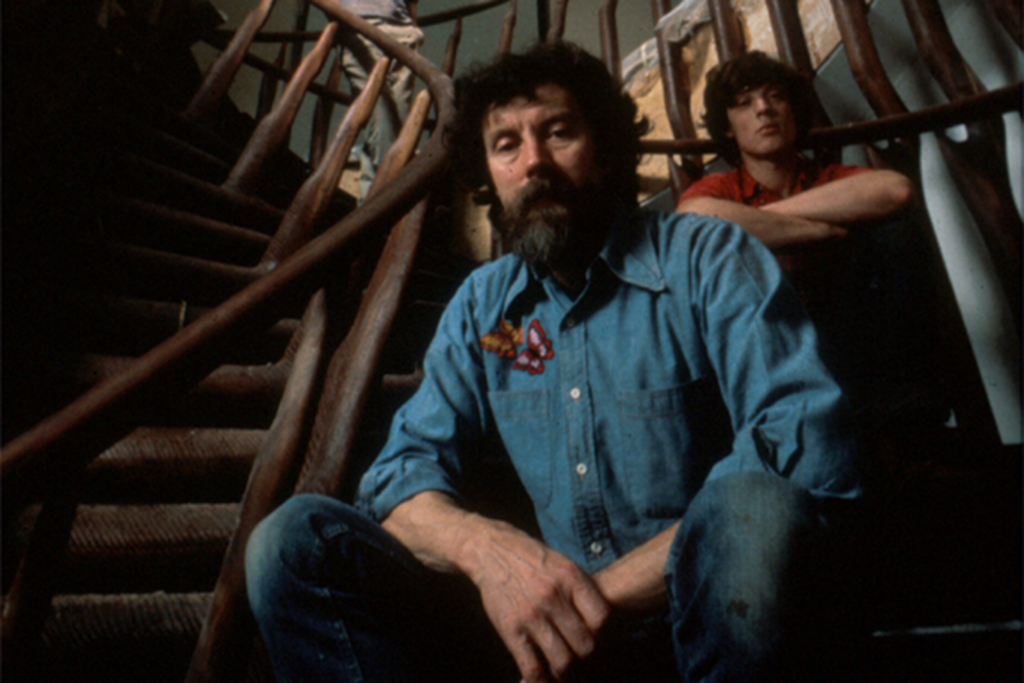
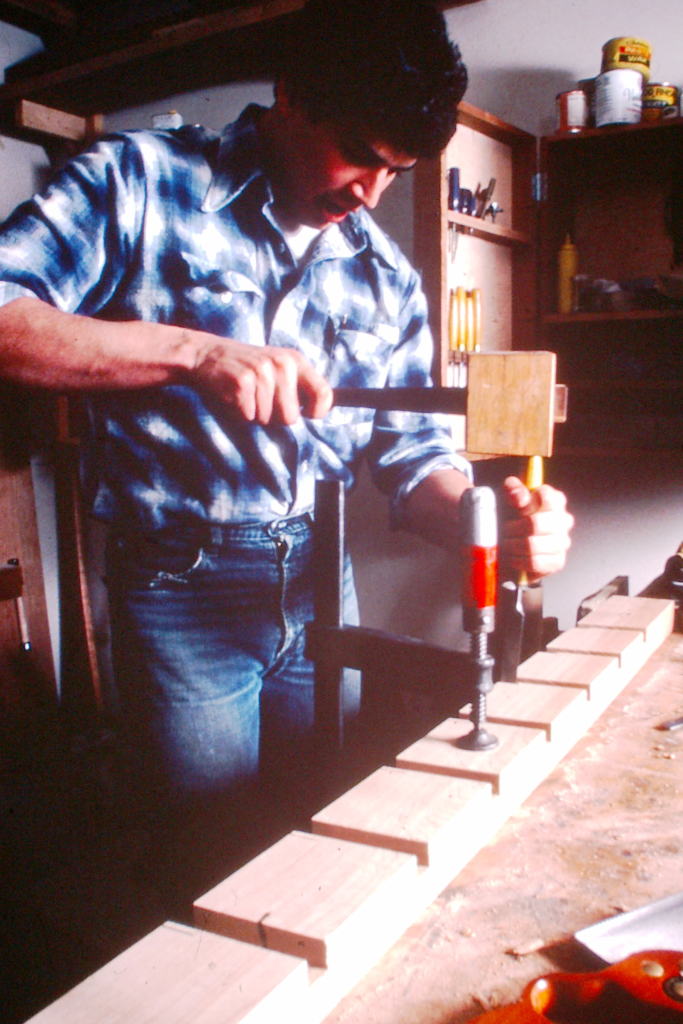
When I arrived at the Wendell Castle Workshop, just south of Rochester, it felt less like a school and more like a live experiment in the chemistry of craft.
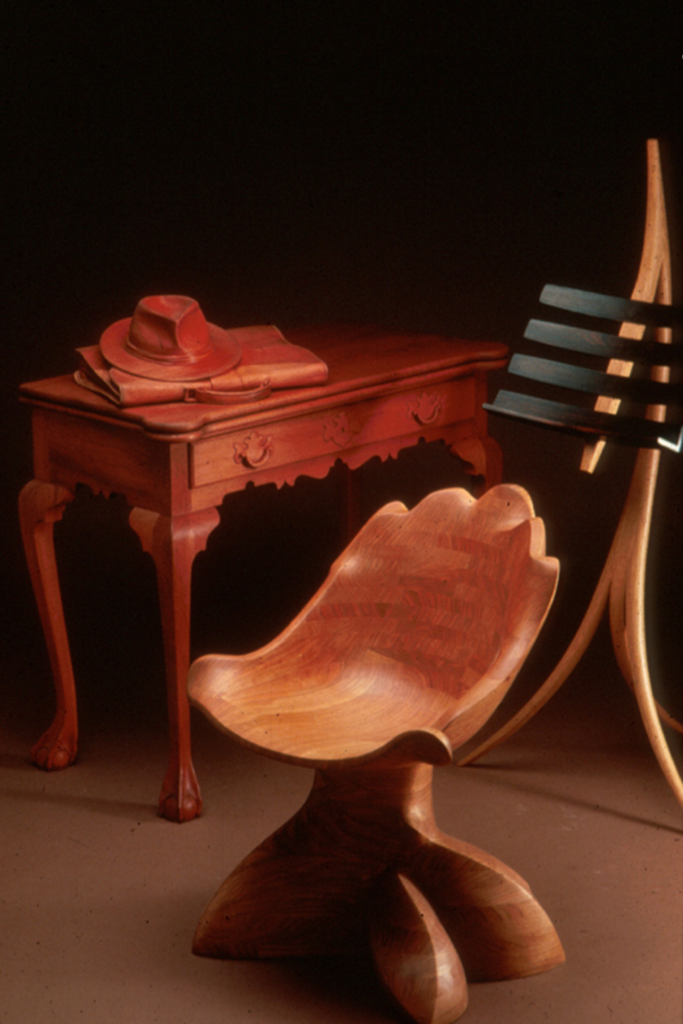
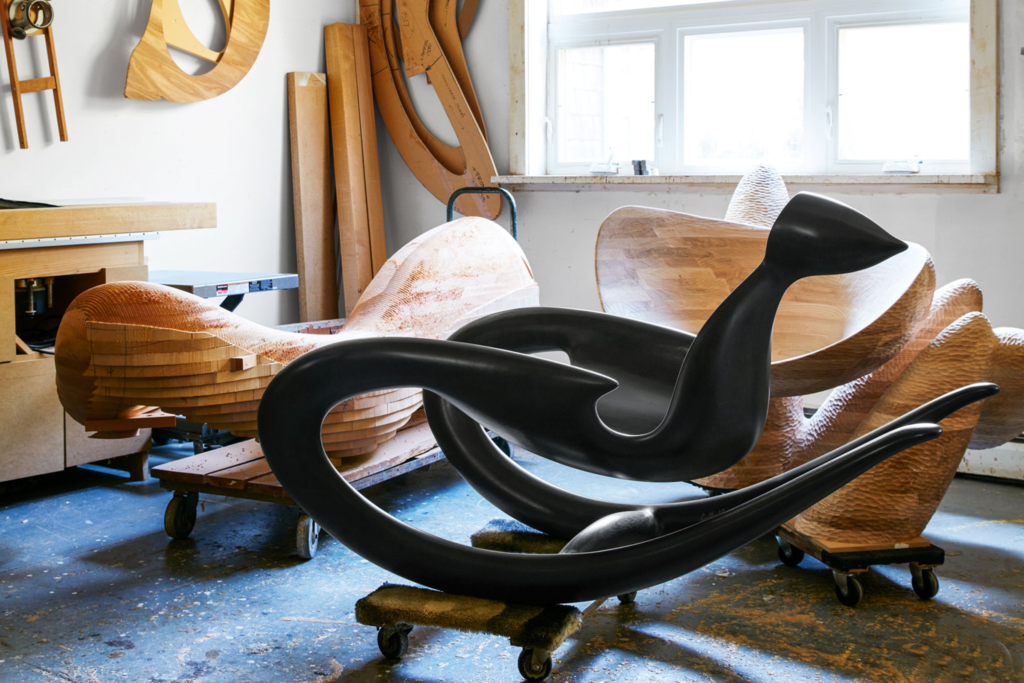
There were only four of us on faculty — Wendell, Stephen Proctor, Bill Sloane, and me. It was my first teaching job out of graduate school, and the learning curve was steep. Wendell was already a legend, his sculptural furniture redefining what wood could do. Stephen, recently arrived from England by introduction of John Makepeace, brought discipline, tradition and refinement of British cabinetmaking — dovetails by instinct, joints that closed with a whisper.
The two of them were brilliant. And at times combustible.
Wendell’s art came from imagination and instinct — “Make it bigger, bolder, stranger.” Stephen’s authority came from precision — “Make it right.” The line between the Workshop and Wendell’s personal studio was paper thin. You could feel their competing energies in the air: Wendell’s curiosity crackling like static, Stephen’s order humming like a tuned machine.
It was an intimidating place to walk into — the air thick with sawdust, ambition, and the scent of lacquer finishing oil.
The program was young then, only in its second year, but already rigorous. Stephen’s foundation class was a test of patience and endurance: four months of planing, chiseling, and dovetailing by hand — no machines, no shortcuts. His students started with rough boards, built dovetail boxes, tables with drawers, and finally cabinets on stands. Every shaving of wood was earned by sweat.
When they finally crossed the threshold into my class, they were exhausted and proud — their hand skills honed, their attitudes sharp. That’s when I introduced them to the table saw.
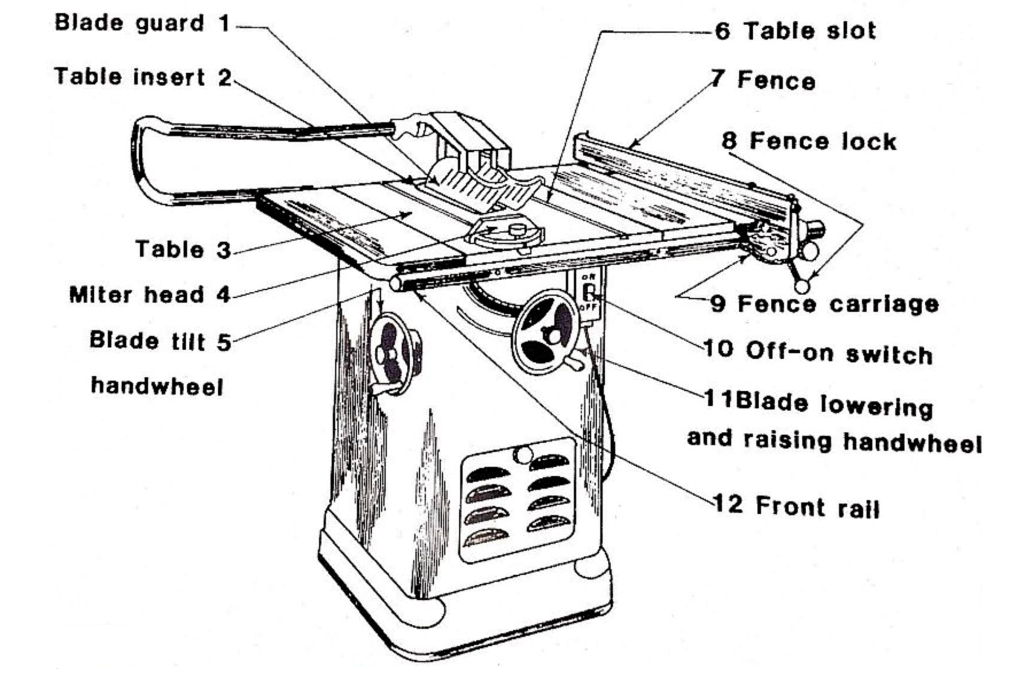
It was a workhorse of a machine — a 16-inch Yates, heavy, steady, quietly powerful. I walked them through its anatomy, its temperament. But as I spoke, I could feel the shift in the room — that subtle resistance from students who thought they’d already conquered the mountain with hand tools. One of them, Scott, finally said what the others were thinking:
“We already know how to do this by hand. Why do we need to spend time on the saw?”
Before I could answer, another student, Jay, grinned and said quietly,
“Because this is how you make money.”
The room went still.
That moment — the collision of attitude and pragmatism — stuck with me. Scott wasn’t wrong: mastery of hand tools is the soul of the craft. But Jay was right too: the table saw is what keeps the lights on. Between them lay the truth I was still learning to teach — that skill without humility is arrogance, and efficiency without understanding is hollow. That’s what the Wendell Castle Workshop was really about: not just form or finish, but finding your balance between art and work, between precision and imagination.
Between the hand and the machine.
Word on Safety:
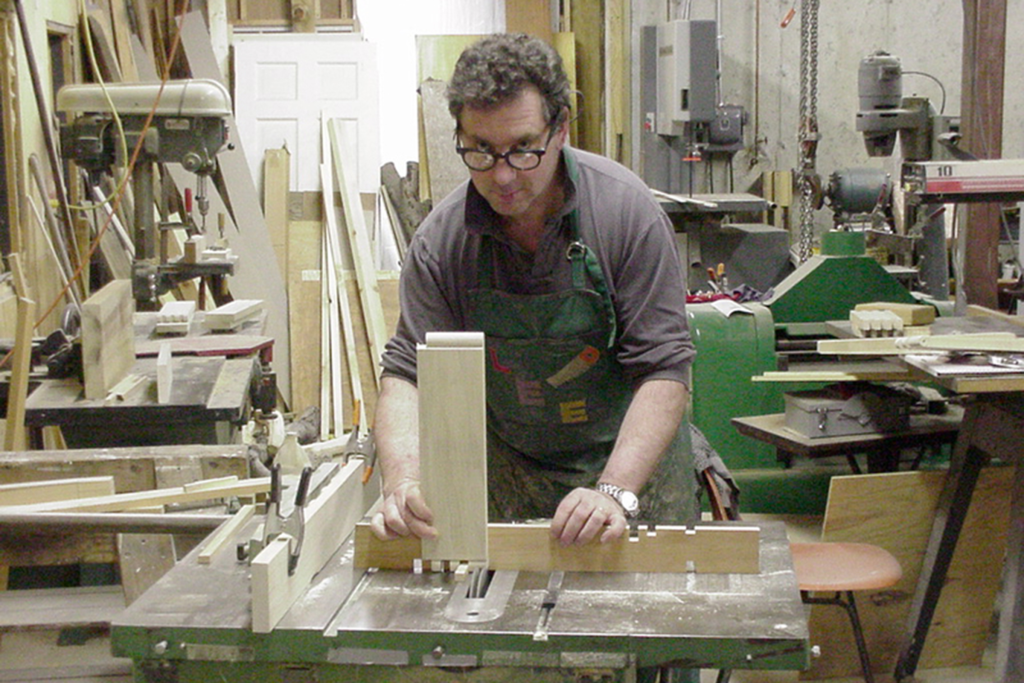
The stories I share here come from years of teaching and working with tools — but they’re stories, not lessons. If you’re thinking about stepping up to a table saw, please learn from a qualified instructor first.
Safe work depends on three things: training, guarding, and oversight. Respect the saw, and it will respect you.